Power Plant and Energy Storage Site Operators: The Workforce Keeping Today’s Grid Running
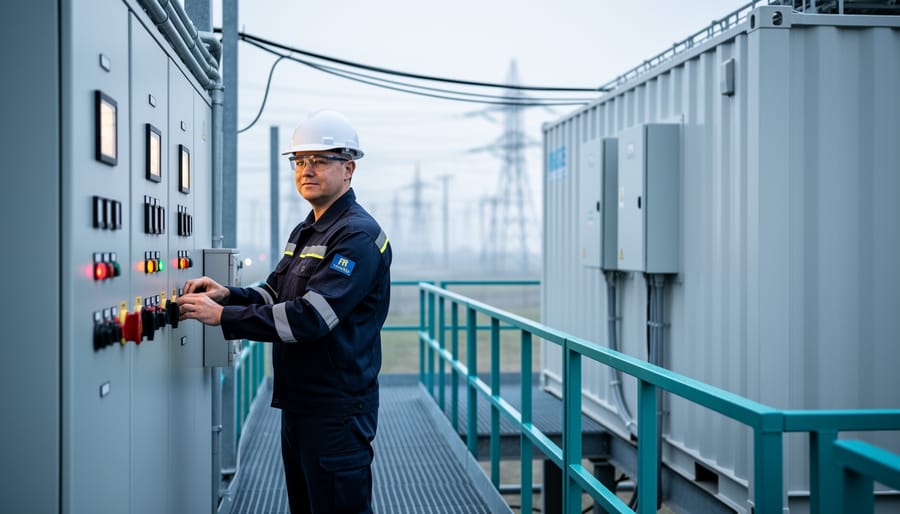
Power plant and energy storage site operators form the specialized workforce responsible for maintaining grid stability, managing complex generation assets, and ensuring reliable electricity delivery across interconnected systems. These professionals monitor real-time operations, execute startup and shutdown sequences, respond to grid frequency deviations, and coordinate with transmission system operators to balance supply and demand minute by minute. The role has evolved dramatically as the energy transition accelerates, requiring operators to manage diverse generation portfolios that integrate conventional fossil assets, nuclear facilities, renewable resources, and increasingly sophisticated battery storage systems.
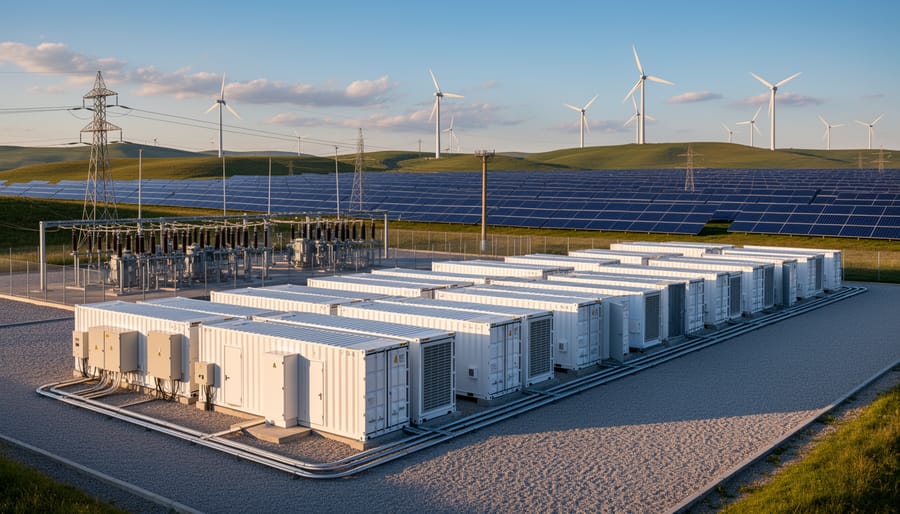
The operational complexity these specialists navigate reflects fundamental shifts in how electricity systems function. Traditional base-load dispatch models have given way to dynamic optimization strategies where operators must account for intermittent renewable output, energy storage charge-discharge cycles, and ancillary service markets. A coal plant operator once focused primarily on boiler efficiency and emissions compliance now works alongside colleagues managing megawatt-scale lithium-ion installations that can ramp from full discharge to full charge in minutes.
Workforce requirements for this sector reflect both technical sophistication and regulatory rigor. Operators typically hold relevant certifications, demonstrate proficiency with supervisory control and data acquisition systems, and maintain current knowledge of grid codes and safety protocols. The human factor remains critical even as automation advances, particularly during abnormal conditions when situational awareness and rapid decision-making prevent cascading failures.
Understanding the capabilities and constraints of this workforce matters for stakeholders across the energy value chain. Grid modernization investments, storage deployment targets, and renewable integration strategies all depend on having qualified personnel who can translate policy ambitions into operational reality. Power Engineering Practice examines how these professionals adapt to technological change while maintaining the reliability standards that underpin modern economies.
The Evolving Role of Power Plant Operators in 2026
From Baseload to Flexibility: New Operational Paradigms
The transition from predictable baseload operation to flexible, real-time grid balancing represents a fundamental shift in how power plant operators work. Where operators once managed units designed to run continuously at steady output for weeks or months between maintenance shutdowns, they now oversee facilities that ramp up and down multiple times daily in response to solar and wind variability.
This operational paradigm demands different mental models and technical approaches. Combined-cycle gas turbines, once optimized for steady efficiency, now cycle frequently to fill generation gaps when renewable output drops. These frequent starts and stops accelerate component wear, requiring operators to balance immediate grid needs against long-term equipment health. Each cold start consumes more fuel, creates thermal stress, and shortens turbine life compared to continuous operation.
The timing challenges have intensified dramatically. California operators navigate the “duck curve” daily, managing steep evening ramps as solar generation plummets and demand peaks simultaneously. During these periods, operators must bring hundreds of megawatts online within minutes while maintaining voltage stability and frequency control.
Plant economics have flipped as well. Units that previously earned steady capacity payments now depend on volatile energy market prices and ancillary service revenues. Operators monitor real-time wholesale prices alongside technical parameters, making dispatch decisions that weigh wear costs against market opportunities. The skills required extend beyond engineering fundamentals into strategic thinking about asset utilization in markets dominated by near-zero marginal cost renewables.
Multi-Technology Competency Requirements
Modern power plant operators must master technical knowledge that spans fundamentally different energy systems. A decade ago, an operator might spend their entire career within coal or natural gas generation. Today’s professionals routinely oversee portfolios combining conventional turbines, solar arrays, wind farms, and battery storage, each with distinct operating characteristics, failure modes, and optimization strategies.
This multi-technology competency extends beyond surface-level familiarity. Operators need working knowledge of combustion dynamics for gas turbines, inverter behavior for solar installations, meteorological impacts on wind output, and electrochemical processes governing battery performance. They must understand how these systems interact during grid events: recognizing when a frequency dip requires fast-ramping gas generation versus battery discharge, or when curtailing wind output prevents transmission congestion.
The knowledge expansion is substantial. Battery operators must grasp state-of-charge calculations, thermal management protocols, and degradation patterns that differ significantly from turbine maintenance cycles. Solar plant operations demand understanding of irradiance variability, module-level power electronics, and tracker positioning. Meanwhile, conventional plant expertise, boiler chemistry, steam cycles, emissions controls, remains relevant at hybrid facilities pairing gas generation with renewables.
Training programs have struggled to keep pace. Many operators acquire multi-technology skills through on-the-job cross-training rather than formal certification programs, creating knowledge gaps and inconsistent competency levels across the workforce. This challenge intensifies as portfolios grow more diverse and operational decisions increasingly require synthesizing inputs from disparate systems.
Energy Storage Site Operations: A Distinct Discipline
Battery Management System Oversight
Battery management system oversight demands constant vigilance from operators navigating the delicate balance between performance optimization and safety constraints. Modern BMS monitors battery conditions across thousands of parameters simultaneously, cell voltages, temperatures, state of charge, state of health, generating data streams that operators must interpret in real time to prevent degradation or thermal events.
Operators interact with BMS platforms through multi-layered interfaces that translate raw sensor data into actionable intelligence. They adjust charge and discharge rates based on temperature profiles, manage cell balancing to prevent capacity fade, and respond to alarm conditions that may indicate developing faults. This oversight extends across different kinds of energy storage each presenting unique operational challenges, lithium-ion systems require strict thermal management, while flow batteries demand electrolyte monitoring and pump control.
Revenue optimization adds another dimension to operator responsibilities. They must execute dispatch strategies that maximize arbitrage opportunities and ancillary service payments while staying within manufacturer warranty parameters. A single aggressive cycling decision can capture immediate revenue but accelerate capacity loss worth hundreds of thousands in replacement costs. Skilled operators develop intuition for these trade-offs, recognizing when BMS alerts signal genuine risk versus conservative manufacturer limits, and knowing exactly how hard they can safely push their systems during high-value grid events.
Responding to Grid Signals in Milliseconds
Energy storage operators face a fundamentally different operational challenge than their counterparts in conventional generation: they must execute control actions measured in milliseconds rather than minutes. When grid frequency deviates from its nominal 50Hz or 60Hz setpoint, battery storage systems receiving automatic generation control signals initiate charge or discharge responses within 100-300 milliseconds, a speed impossible for thermal plants where ramp rates are constrained by mechanical and thermal limitations.
This ultra-fast response capability transforms the operator’s role from direct command execution to supervisory oversight of automated systems. Operators configure response parameters, set operating envelopes, and monitor automated reactions to thousands of grid signals daily. A frequency regulation battery might change its charge-discharge state dozens of times per hour, each transition automated but occurring within boundaries the operator establishes based on state of charge, temperature limits, grid service contracts, and revenue optimization algorithms.
The challenge intensifies when multiple grid services layer simultaneously. An operator might configure a storage asset to provide primary frequency response, participate in energy arbitrage, and reserve capacity for contingency services, each requiring different response speeds and priority hierarchies. Managing these conflicting demands requires understanding grid coding requirements, market rules, and the technical constraints of lithium-ion cells that degrade faster under aggressive cycling.
Operators must also recognize when automated responses produce unintended consequences. Oscillating frequency signals can cause battery systems to chase unstable grid conditions, while communication latency between control centers and assets creates timing mismatches. Human intervention becomes critical when automated logic encounters edge cases, requiring operators to temporarily disable services, adjust parameters, or coordinate manual overrides with transmission operators during grid disturbances.
Critical Skills and Training Pathways
The operational complexity of modern energy infrastructure demands a workforce equipped with both traditional power generation knowledge and emerging technology competencies. Today’s operators must combine electrical engineering fundamentals with software proficiency, safety consciousness with rapid decision-making skills, and mechanical aptitude with data analysis capabilities.
Most power plant operator positions require at least a high school diploma supplemented by extensive on-the-job training, though increasingly, employers prefer candidates with associate or bachelor’s degrees in electrical technology, mechanical engineering, or energy systems. The learning curve is steep. Entry-level operators typically spend one to three years in trainee positions, shadowing experienced personnel and mastering specific plant systems before assuming independent control room responsibilities.
Formal certifications provide industry-recognized validation of operator competence:
- NERC System Operator Certification
- Required for operators managing facilities that directly impact bulk power system reliability. Validates understanding of grid interconnection protocols, emergency procedures, and reliability standards.
- Control Room Operator License
- State or regional licenses demonstrating proficiency in plant operations, safety protocols, and emergency response specific to generation technology type.
- SCADA Systems Expertise
- Competency in supervisory control and data acquisition platforms that provide real-time monitoring and control of distributed energy assets across geographic regions.
- Electrical Engineering Fundamentals
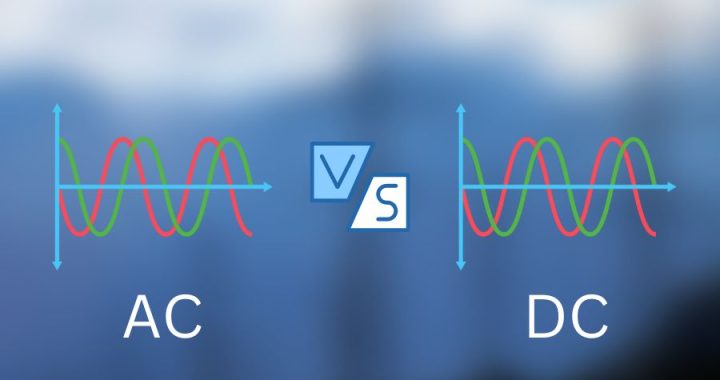
- Core knowledge of AC/DC power systems, protective relaying, transformer operations, and electrical safety essential for troubleshooting and emergency response.
The skills gap facing the industry stems from multiple factors. The experienced operator workforce is aging, with significant retirements projected through 2030. Meanwhile, renewable integration and energy storage deployment are creating demand for operators with hybrid skill sets that traditional training programs haven’t addressed. A coal plant operator with 25 years of experience may struggle to manage battery dispatch optimization or solar forecasting integration without substantial retraining.
Industry responses include partnerships between utilities, equipment manufacturers, and technical colleges to develop curriculum addressing modern operational realities. Companies like Tesla Energy and Fluence offer specialized training programs for battery storage operations, while traditional utilities are expanding their internal academies to cover renewable integration. Simulator-based training has become essential, allowing operators to practice responding to rare but critical events without risking actual assets.
The most successful training pathways combine classroom instruction, hands-on mechanical training, simulator exercises, and mentored operational experience. Operators who thrive in this environment demonstrate continuous learning mindsets, comfort with digital interfaces, and the ability to maintain situational awareness across multiple systems simultaneously while making safety-critical decisions under pressure.
Safety Protocols and Incident Management
Safety represents the paramount concern for power plant and energy storage site operators, who work daily with high-voltage electrical systems, hazardous materials, and equipment capable of releasing massive amounts of energy in milliseconds. The consequences of procedural failures or lapses in situational awareness can be catastrophic, making rigorous safety protocols and incident management capabilities non-negotiable aspects of the operator role.
Operators undergo extensive safety training covering lockout-tagout procedures, confined space entry, electrical safety, and hazardous energy control before assuming independent operational responsibilities. Daily pre-shift safety briefings reinforce awareness of active work permits, ongoing maintenance activities, and environmental conditions that might affect safe operation. Many facilities employ the “two-person rule” for high-risk tasks, ensuring that no operator works alone in potentially hazardous situations.
Energy storage facilities introduce safety challenges that differ markedly from conventional generation. Thermal runaway in lithium-ion battery systems can propagate rapidly through adjacent cells and modules, generating toxic gases and intense heat. Operators must recognize early warning signs, abnormal temperature differentials, voltage anomalies, off-gassing detection, and execute immediate response protocols that typically involve isolating affected sections, activating suppression systems, and evacuating personnel to safe distances.
Arc flash hazards in high-voltage DC systems present another storage-specific risk. Unlike AC systems where circuit breakers can interrupt current at zero-crossing points, DC arcs can sustain themselves until the energy source is completely isolated. Operators conducting switching operations near energized battery strings wear appropriate personal protective equipment rated for the specific incident energy levels calculated for their facility.
Emergency response protocols establish clear command structures and communication chains when incidents occur. Operators receive training in incident command systems, enabling them to coordinate effectively with external emergency responders who may be unfamiliar with energy infrastructure hazards. Regular drills covering scenarios from minor chemical spills to full facility evacuations ensure that response actions become reflexive under stress. Post-incident reviews dissect contributing factors without assigning blame, fostering a culture where reporting near-misses and procedural deviations becomes standard practice rather than career risk.
Technology Integration: SCADA, AI, and Automation
SCADA Systems as Operational Command Centers
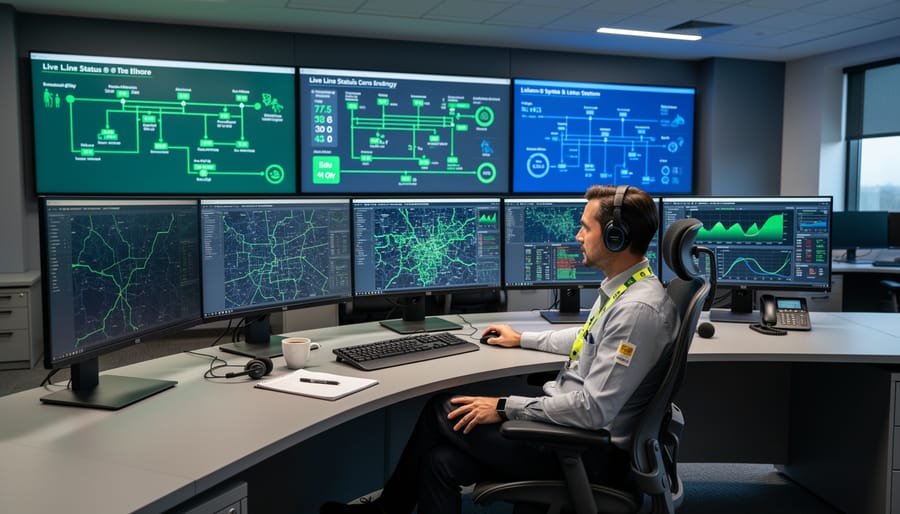
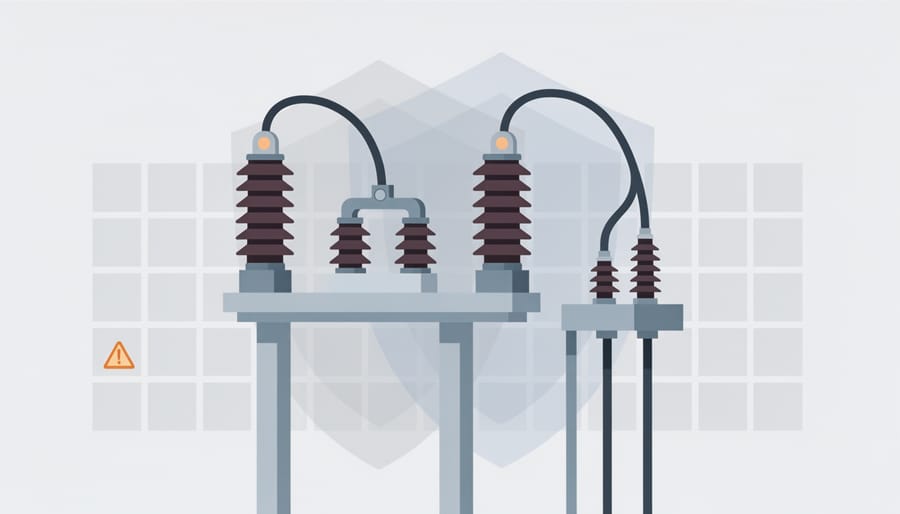
Modern SCADA systems have evolved far beyond simple monitoring dashboards into sophisticated operational command centers where power plant and energy storage site operators manage complex, geographically dispersed assets in real time. These platforms integrate data streams from hundreds or thousands of sensors, providing operators with comprehensive visibility into everything from turbine vibrations and transformer temperatures to battery state-of-charge and grid frequency deviations across multiple sites simultaneously.
Operators interact with SCADA interfaces that consolidate telemetry data, alarm notifications, and control capabilities into unified workspaces. A single operator can monitor a wind farm in West Texas, a solar-plus-storage facility in Arizona, and a natural gas peaker plant in California from one control room, responding to grid conditions and market signals across all three assets. The system presents hierarchical views ranging from portfolio-level overview screens down to individual equipment status, allowing operators to drill into anomalies while maintaining situational awareness across the entire fleet.
The real power of SCADA lies in enabling rapid response to changing conditions. When a battery storage system detects a temperature spike in one module, the operator receives an immediate alarm with contextual data, historical trends, and recommended actions. This integration of monitoring, diagnostics, and control functions enhances system safety while allowing operators to make informed decisions under time pressure. Remote control capabilities mean operators can adjust setpoints, start or stop equipment, and reconfigure operations without physically visiting facilities, though protocols typically require operator confirmation before executing critical commands to maintain human oversight of automated recommendations.
When Algorithms Fail: The Irreplaceable Human Operator
The paradox of increasingly sophisticated automation is that it has made human operators more crucial, not less. While algorithms excel at optimizing routine operations within expected parameters, they struggle with the unexpected, sensor malfunctions that produce plausible but incorrect data, cascading failures that unfold in novel patterns, or equipment behavior that contradicts programmed assumptions.
During a 2024 incident at a Texas battery storage facility, automated systems detected a thermal anomaly and initiated standard cooling protocols. An experienced operator recognized that the temperature readings conflicted with other indicators and overrode the automated response, preventing what would have been catastrophic overcooling damage to lithium-ion cells already compromised by a manufacturing defect. The algorithm followed its programming perfectly; the human recognized something fundamentally wrong with the underlying data.
Operators develop pattern recognition that transcends algorithmic rules. They notice the subtle vibration change that precedes a bearing failure by weeks, or recognize that multiple minor alarms across different systems signal an emerging grid disturbance rather than isolated equipment issues. This contextual awareness, drawing on years of experience with specific equipment quirks, seasonal patterns, and system interdependencies, cannot be replicated by machine learning models trained on historical data that, by definition, doesn’t include truly novel scenarios.
When transmission operators issue emergency directives during grid instability events, human judgment determines how to balance competing priorities: asset preservation, grid support obligations, safety protocols, and contractual commitments. Automation assists; operators decide.
Workforce Challenges and Industry Outlook
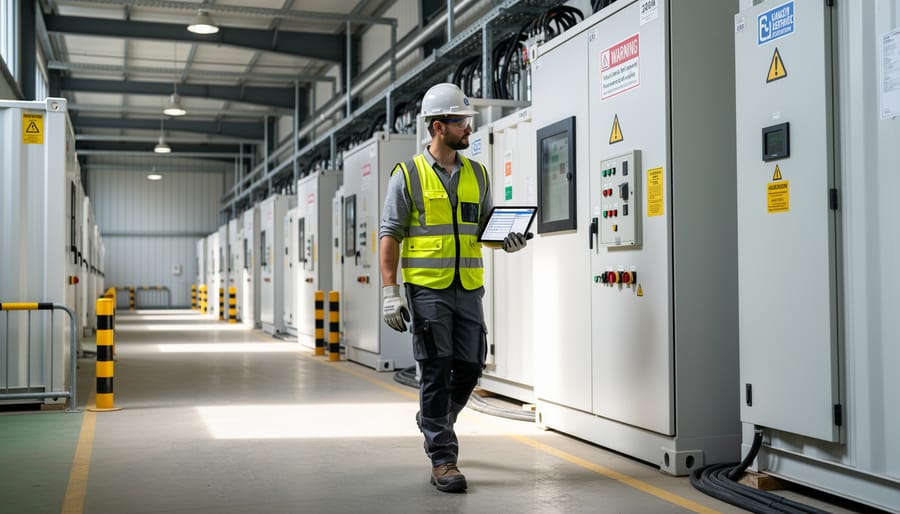
The energy industry faces a looming workforce crisis in power plant and storage facility operations. As experienced operators retire and technology demands evolve, utilities and facility owners struggle to recruit and retain qualified personnel. Nearly 40 percent of the current power plant operator workforce is over 50 years old, with retirement projections suggesting a significant talent exodus within the next five to seven years. Meanwhile, the proliferation of energy storage installations is creating demand for specialized operational expertise that traditional fossil fuel operator training hasn’t addressed.
Recruitment challenges stem from multiple factors. The role’s 24/7 shift-work nature deters younger workers seeking work-life balance. Remote facility locations reduce the candidate pool. Competition from adjacent industries, particularly AI for operations technology companies, oil and gas, and manufacturing, often offers better compensation packages without shift requirements. Many vocational and technical schools have reduced or eliminated power plant operator programs as enrollment declined during the coal plant retirement wave, creating a qualification pipeline bottleneck precisely when storage deployment accelerates.
| Facility Type | Typical Staffing (Per Site) | Projected 2030 Demand | Skills Premium |
|---|---|---|---|
| Traditional Combined Cycle | 15-25 operators | Declining | Base |
| Utility-Scale Battery Storage | 2-6 operators | +250% growth | +15-25% |
| Hybrid Renewable + Storage | 8-15 operators | +180% growth | +20-30% |
Compensation trends reflect these pressures. Entry-level storage facility operators in competitive markets now command salaries 15 to 25 percent above equivalent traditional plant positions, with experienced operators seeing premiums approaching 30 percent. Some utilities offer retention bonuses, shift differential increases, and tuition reimbursement for advanced certifications. Career advancement remains challenging, however, as flatter organizational structures in newer storage facilities reduce promotion pathways compared to legacy plant hierarchies.
Industry initiatives are emerging to address the gap. Several states have launched apprenticeship programs combining classroom instruction with paid on-site training. Equipment manufacturers now offer operator training as part of facility commissioning. Community colleges are partnering with utilities to develop storage-specific curriculum. But these efforts face timing challenges: training programs require two to three years to produce qualified operators, while storage installations are accelerating now. The mismatch between deployment speed and workforce development threatens to become a bottleneck in the energy transition itself.
The reliability of tomorrow’s energy system rests not in algorithms alone, but in the skilled hands and sharp minds of the operators who run power plants and storage facilities. As smart grids expand and renewable penetration deepens, the operational challenge grows exponentially more complex. Every megawatt-hour of clean energy delivered depends on professionals who can interpret anomalies, override faulty automation, and maintain stability when conventional playbooks no longer apply.
Investment in generation hardware and battery capacity means little without parallel investment in the workforce that operates these assets. The energy transition demands operators fluent in multiple technologies, comfortable with millisecond response times, and capable of navigating the intersection of grid physics and digital systems. Training programs, competitive compensation, and clear career pathways aren’t optional enhancements, they’re prerequisites for a functional decarbonized grid.
The industry’s ability to recruit, train, and retain these professionals will determine whether ambitious renewable targets translate into reliable power delivery or become exercises in wishful thinking. Grid modernization is ultimately a human capital challenge as much as a technological one.